
Translated to English
Jan. 15, 2026
Radio France International
Nicolas Feldmann
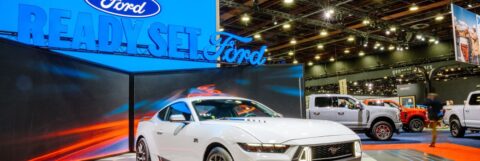
The Detroit Auto Show opened its doors on Wednesday, January 14th in the United States. More than forty brands are gathered in the heart of America’s automotive industry. This year’s edition is marked by a decline in electric vehicles. Fewer models, fewer announcements, and scaled-back ambitions from manufacturers.
In the aisles of the auto show , the trend is clear. On the stands, American pickup trucks and SUVs equipped with internal combustion or hybrid engines are on display. Visitors can test drive them on specially designed tracks. And while all-electric cars are certainly present, they are much less visible this year.
Glenn Stevens, who heads the Michigan Automotive Industry Association, has his explanation: “The challenge currently in the United States is that the adoption of electric vehicles is very slow. And the reason is very simple: consumers need to demand these vehicles, but that’s not the case. But I would say that, overall, the United States is also not where it should be in terms of infrastructure; the charging network is a major issue. ”
Washington Changes Course, the Industry Adapts
Demand is stagnating, charging stations are still too scarce, and the political climate isn’t helping. Since Donald Trump ‘s return to the White House, federal policy has shifted. The electric vehicle sales targets set by Joe Biden have been abandoned. Purchase incentives have been eliminated, and environmental standards have been relaxed. As a result, several manufacturers have delayed and even abandoned electric vehicle projects.
These reversals come at a cost. Ford estimates its future losses at $19 billion, while General Motors projects $7 billion. But these decisions are necessary, explains Sean Poppitt, the group’s director of communications: ” It’s clear there has been a shift in the market. In the United States in particular, there have been regulatory changes and changes in government incentives. As a result, the electric vehicle market has slowed, and demand has declined. But we are absolutely not abandoning electric vehicles. It’s simply that today, especially in the United States, we are working with more realistic demand levels. And we have adjusted our production accordingly. ”
An American Market That Goes Against the Grain of the Rest of the World
This decline in electric vehicle sales is already being felt. While electric car purchases are on the rise worldwide, the United States saw only modest growth of 1% in 2025. ” The electric vehicle market here in the United States is facing a bit more of a challenge than in the rest of the world because the subsidies and tax credits ended at the end of September, ” explains Bertrand Rakoto, an automotive consultant for Ducker Carlisle. ” So, there was a surge in sales in September, and now the market is a bit more constrained. Some manufacturers have suspended programs or production, or even canceled them altogether. This is the case with Ford and GM. We’re in an electric vehicle market that continues to grow, but at a much slower pace than before. ”
Rather than an abandonment, manufacturers are talking about a slowdown, because in the United States some are still betting on electric vehicles. And while Washington is easing off, some states are resisting. California, in particular, and seventeen other states, continue to impose strict environmental standards on manufacturers.