

MichAuto > Blog > 2025 State of the Industry > The Global Forces Impacting Michigan’s Signature Industry

The Global Forces Impacting Michigan’s Signature Industry

December 15, 2025 madison lorincz headshot

Madison Lorincz | Integrated Marketing Specialist, MichAuto

With Michigan’s signature industry undergoing rapid transformation, from tariffs and shifting fuel economy standards to the accelerated growth of Chinese competitors, the message is clear: Michigan cannot expect to win the future of the industry solely through legacy.

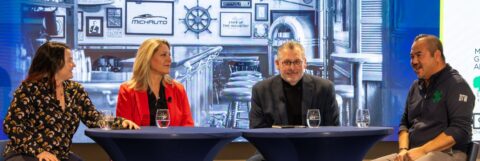
On Dec. 10, MichAuto investors, partners, and government officials came together for a critical conversation on the global forces of change and innovation impacting Michigan’s automobility industry.

During the event, MichAuto released the State of Automobility report, which identifies the forces of change shaping its future, weaknesses that threaten global leadership, and strengths that reinforce it.

2025: The Year of Unforeseen Shifts

2025 reshaped Michigan’s automobility industry in ways few could have imagined, making it the year when the unexpected became the norm. When asked to name the most unexpected thing that occurred in 2025, Tu Le mentioned the U.S.-Mexico-Canada Agreement getting “blown up.”

Daniel Howes described another unexpected turn Michigan faced in 2025: a strategic reversal in the automotive industry. With EV incentives being taken away, the industry has begun to pull back, drifting away from the global stage.

“When I first started covering as a beat writer at General Motors, one of the reasons I was so blown away by the opportunities was that they were everywhere,” Howes said. “Now they’ve retreated to only places where they make a profit.”

Lastly, Elizabeth Krear pointed to another unexpected turn Michigan faced in 2025: the significant rollback of emissions and Corporate Average Fuel Economy regulations.

“Growing up as an engineer in the industry, we lived and breathed those policies,” she reflected on.

These policies have long provided clear targets, especially in guiding the EV transition. With their reversal, however, the industry across California, Europe, and China is now forced to rethink its strategies, shifting from policy-driven benchmarks to a landscape where customers themselves set the pace.

Is Michigan Ready to Compete Globally?

Although Michigan is a major player in the global automotive industry, we may not be ready to keep up with the industry’s rapidly increasing pace. Chinese companies are moving so fast that GM and Ford Motor Company have relied on China for building hybrid vehicles. China isn’t just a competitor; it’s become the global hub for auto manufacturing and exports.

“When it comes to dealing and talking with the tier ones and the OEMs, quite often it’s culture and management that needs to change, and the speed at which things happen, and decisions are made,” Le said. “Right now, a Chinese company can go from clean sheet to job one in 18 months.”

Another way to assess whether Michigan’s signature industry is ready to compete globally is to examine affordability and consumer behavior. The industry can’t rely on old consumer habits. Rising prices and shifting demand mean Michigan’s automakers must stay flexible.

“This year in 2025, we saw an uptick in SUVs and large trucks,” Krear said. “However, these are not the type of vehicles that the U.S. consumer would currently buy.”

A Hopeful Horizon of Opportunity

In light of the unexpected turns Michigan faced in 2025, Krear emphasized the importance of partnerships as a critical asset heading into 2026. As technology advances, collaborations between OEMs and suppliers are becoming increasingly prominent, with Volkswagen teaming up with Rivian and LG Energy partnering with GM.

As Michigan also enters a pivotal election year, what kind of leadership and conversations will be required to drive meaningful change? Reflecting on three decades of covering issues related to talent retention and educational attainment, Howes noted that these issues have not shown significant improvement and emphasized the need for honest, nonpartisan dialogue.

“When it has gotten materially better, it hasn’t hung on to the gains,” he said. “While we live in a partisan age, partisanship is not the answer because it wasn’t the answer in Detroit.”

Closing out what to look forward to in 2026, Le also expressed his concerns about our area not being as welcoming to new companies like Waymo.

“If we’re supposed to be the global epicenter of mobility and not automotive … why aren’t these companies here?” Le asked. “Because they don’t feel welcome. The talent is not here, and the automotive companies take all the air out of the room.”

View photos from the event.