
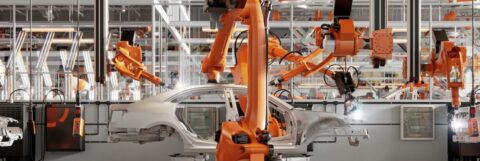
Michigan’s automotive leadership has always been rooted in innovation. The state helped define the modern automobile, built the manufacturing systems that scaled it, and cultivated the engineering expertise that continues to shape the industry. But the nature of innovation is changing. The next generation of automotive leadership will be driven by software, artificial intelligence, automation, advanced manufacturing, connectivity, electrification, autonomous systems, and new mobility business models.
The roadmap emphasizes that innovation is no longer only about invention. It is about commercialization, speed, scale, and execution. Regions that move quickly from concept to market will gain competitive advantage. Michigan has strong research institutions, experienced engineers, test facilities, suppliers, manufacturers, and startups. The challenge is ensuring that these capabilities connect efficiently so ideas can become products, companies, jobs, and investment.
Stakeholders repeatedly noted that promising technologies can stall when innovators lack access to capital, customers, pilot opportunities, commercialization support, or clear pathways into the automotive supply chain. Startups may not know where to find the right corporate partners. Suppliers may struggle to adopt new technologies without technical assistance or investment support. Universities may generate research that is difficult to translate into market-ready solutions. These gaps slow progress and weaken Michigan’s competitive position.
To strengthen innovation, Michigan must improve the connective tissue of its ecosystem. That means supporting university-industry partnerships, expanding commercialization resources, increasing access to startup capital, creating testbeds for emerging technologies, and helping small and mid-sized suppliers modernize. It also means recognizing that innovation and manufacturing are increasingly intertwined. Advanced production systems, AI-enabled quality control, digital twins, robotics, and software integration are now central to competitiveness.
Michigan also has an opportunity to lead in areas where its strengths are especially relevant. Software-defined vehicles require deep vehicle systems knowledge. Advanced manufacturing requires industrial expertise. Mobility innovation requires proximity to OEMs, suppliers, infrastructure partners, and research institutions. Few places can match Michigan’s combination of technical depth and industry density.
The roadmap’s message is clear: Michigan must make innovation easier to commercialize and easier to scale. If the state can connect ideas to capital, talent, customers, and production capacity, it can remain a global center for automotive innovation. The opportunity is enormous, but speed matters. Future leadership will belong to the regions that can turn innovation into impact.