
Every conversation about Michigan’s automotive future eventually turns to talent. The Michigan Automotive Roadmap identifies workforce development as one of the most important factors shaping the state’s long-term competitiveness. Michigan’s ability to lead in advanced manufacturing, software-defined vehicles, artificial intelligence, electrification, automation, and mobility innovation will depend on whether employers can access the workers and skills they need.
The talent challenge is broad. Employers need skilled trades workers to maintain and modernize manufacturing facilities. They need engineers who understand both vehicles and software. They need technicians who can operate automated systems, data professionals who can support artificial intelligence, and workers who can adapt as production technologies evolve. These needs extend across the entire pipeline, from K-12 education to community colleges, universities, apprenticeships, incumbent worker training, and career awareness programs.
Stakeholders emphasized that the solution is not simply producing more graduates. Michigan must build a coordinated statewide talent strategy that connects education to employment, exposes students to modern automotive careers earlier, expands work-based learning, and helps existing workers continuously develop new skills. The roadmap calls for stronger alignment among employers, educators, workforce agencies, labor organizations, and economic development partners.
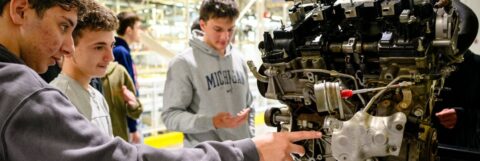
Career awareness is especially important. Modern manufacturing bears little resemblance to outdated perceptions of factory work. Today’s automotive careers involve robotics, software, data, advanced materials, industrial design, systems engineering, cybersecurity, and emerging mobility technologies. Michigan ranks 49th in the nation for its ratio of students to school counselors, at roughly 598 to 1 against a recommended 250 to 1, which makes it harder for young people to learn about these careers early. Students, parents, counselors, and educators need clearer pathways that show how classroom learning connects to high-demand careers with strong wages and long-term growth.
Retention is another critical issue. Michigan ranks first in the nation for its concentration of engineers, but too many graduates leave for opportunities elsewhere. Strengthening internships, co-ops, apprenticeships, research partnerships, startup opportunities, and employer connections can help students see a future for themselves in Michigan. At the same time, the state must attract technology talent from outside its borders by promoting career opportunities at the intersection of automotive, software, mobility, and advanced manufacturing.
